
The finishing step your edible beans need. The LMC Bean Polisher removes the fine dusty film from beans after cleaning — delivering a bright, market-ready finish that improves grade, buyer perception, and sale price. Supplied and supported across Canada by Vistasort.
After edible beans pass through pre-cleaning, air and screen cleaning, destoning, and gravity separation, they are technically clean — but not visually finished. Harvesting, drying, and cleaning leave a fine dusty film on the surface of the seed coat that dulls the beans' natural appearance and can affect buyer perception and market grade.
A bean polisher is a finishing machine that removes this surface film using gentle abrasive material — most commonly sawdust or rice hulls — blended with the beans as they pass through the machine. The result is a brighter, more uniform product with higher visual appeal that meets the surface quality requirements of domestic and export buyers.
The LMC Bean Polisher is the industry-standard choice for edible bean processing facilities in Western Canada and throughout North America — combining proven auger-blending technology with a split-removal screen system that keeps finished product quality consistent.
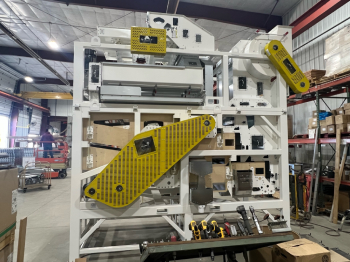
The LMC Bean Polisher uses a four-stage process to deliver a consistent, high-quality surface finish on edible beans — with integrated split separation to maintain finished product purity.
Pre-cleaned beans are fed into the polisher at a controlled rate. For best results, beans should have passed through air and screen cleaning and gravity separation before entering the polisher — ensuring the polishing material contacts clean bean surfaces and is not wasted on heavy foreign material removal.
Polishing material — sawdust or rice hulls — is introduced and blended with the beans by an auger system. The auger creates continuous, controlled contact between the abrasive material and the bean surface coat, lifting the fine dusty film through mechanical abrasion while keeping the action gentle enough to avoid cracking or splitting sound beans.
Any splits present in the product pass through top screens into separate lower screens during the polishing process. This integrated split removal system ensures that split beans are extracted before the finished product exits the machine — keeping finished grade clean without a separate downstream screening step.
Polishing material is used for a period of 8–10 hours before it loses effective polishing ability. At that point, the spent material is exchanged for a fresh load. Both sawdust and rice hulls are readily available, low-cost options — making the LMC polisher economical to operate on a continuous basis in high-volume processing environments.
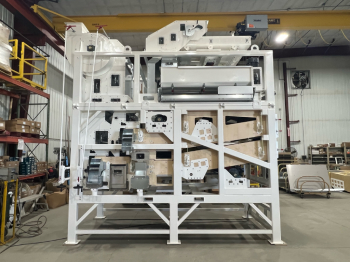
Two polishing materials are in common use with the LMC Bean Polisher. Both deliver effective surface film removal through gentle abrasive contact:
Every aspect of the LMC Bean Polisher is designed for effective, gentle finishing with minimal product loss and straightforward operation.
The auger system provides thorough, consistent contact between the polishing material and bean surfaces — ensuring even polish distribution across the entire product stream rather than surface-only contact.
Top screens sift splits through to separate lower screens during the polishing process — removing split beans from the finished product stream without an additional downstream machine.
The polishing action removes surface film without the mechanical force needed to crack or split sound beans. Finished product integrity is maintained even at continuous high throughput.
Changeover is straightforward — spent material is discharged and a fresh load is added with minimal downtime. Both sawdust and rice hulls are low-cost, readily available options across Western Canada.
Built by LMC (Lewis M. Carter Manufacturing) for continuous operation in high-volume commercial edible bean processing facilities. Designed for reliability and long service life in demanding Prairie processing environments.
A polished bean presents better to buyers and inspectors — brighter surface, more uniform appearance, reduced dust. Polishing is standard practice for facilities targeting premium domestic and export market grades.
The LMC Bean Polisher works with both common polishing materials. The right choice depends on your bean variety, the degree of surface contamination, and regional availability.
Fine wood sawdust is the most common polishing material for edible beans in Western Canada. It provides effective, gentle abrasion that removes surface dust and film without excessive impact on the seed coat. Sawdust is widely available and low-cost, making it the standard choice for most navy bean, pinto bean, and lentil polishing operations.
Rice hulls provide slightly more abrasive polishing action than sawdust — effective when beans carry a heavier surface film, have been stored for extended periods, or require a higher degree of finish for premium export markets. Rice hulls are a byproduct of rice milling and are available as a dry, low-moisture material well suited to bean polishing applications.
Both sawdust and rice hulls are used for a period of 8–10 hours under normal operating conditions before they lose effective polishing ability. At that point, the spent material is discharged and replaced with a fresh load. The changeover process is simple and requires minimal downtime — keeping the polisher in continuous production with low operating cost.
The LMC Bean Polisher is designed primarily for edible beans and pulses — the crops where surface appearance most directly impacts market grade and buyer price.
The primary Prairie edible bean crop. Polishing is standard practice for navy beans destined for domestic retail and export markets — removing surface dust accumulated during harvest and cleaning.
Black turtle beans benefit significantly from polishing — the dark seed coat shows surface dust very readily, and polishing restores the high-gloss finish buyers expect in premium export-grade black beans.
Pinto bean polishing removes surface film and improves colour uniformity across the distinctive mottled seed coat pattern — important for meeting the visual quality standards of US and Mexican export markets.
Kidney beans, cranberry beans, adzuki beans, and other specialty edible bean varieties are polished using the same sawdust or rice hull material — effective across a wide range of bean sizes and seed coat types.
Chickpeas are increasingly polished before export to improve surface appearance and reduce dust. The LMC polisher's gentle action is well-suited to the relatively large seed size and firm seed coat of chickpeas.
Lentils and field peas can be polished using the LMC bean polisher to improve surface cleanliness and visual grade before packaging. Particularly relevant for whole lentils and peas sold into premium retail and food service channels.
Soybeans destined for food-grade markets — including edamame, tofu, and soy milk applications — benefit from polishing to remove surface dust and improve the presentation of the seed coat before processing or export.
Any dry, flowable crop where surface appearance impacts market value is a candidate for bean polishing. Contact Vistasort to discuss your specific crop and processing requirements.
Bean polishing is the final finishing step — positioned at the end of the cleaning line after all separation work is done, and before packaging.
Scalping and initial air separation to remove large trash, straw, and light material at harvest intake.
Air and screen separation to remove fines, weed seeds, and off-size material by size and aerodynamic profile.
Stone removal and gravity separation by density — removing damaged, lightweight, and foreign material.
Optical sorting to remove discoloured, diseased, or off-type beans that pass all physical separation steps.
Final finishing — sawdust or rice hull polishing removes surface dust and film to deliver a bright, market-ready product.
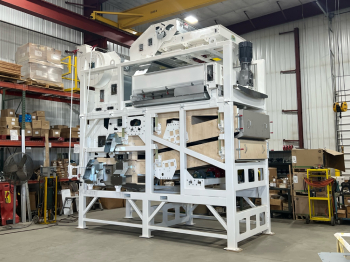
The LMC Bean Polisher is manufactured by Lewis M. Carter Manufacturing — a leader in edible bean and pulse processing equipment since 1941. Vistasort is the authorized Canadian dealer and service provider for LMC equipment across Western Canada.
Vistasort is Western Canada's authorized LMC dealer — supplying, commissioning, and supporting LMC bean processing equipment from our Saskatoon facility.
LMC equipment sold through Vistasort is backed by local parts availability and service support from our Saskatoon facility. You're not waiting weeks for parts to clear a US border — Vistasort maintains LMC inventory to keep your processing line running.
New LMC equipment purchased through Vistasort includes commissioning and operator training. Our technicians ensure your bean polisher is installed, calibrated, and running correctly before they leave your facility.
Vistasort doesn't just sell individual machines — we understand the complete processing line from pre-cleaning through color sorting and packaging. Bean polisher recommendations are made in context of your full facility and crop mix.
Prairie edible bean processing has specific demands that differ from grain cleaning. Vistasort's team has decades of experience with lentils, peas, navy beans, black beans, and specialty pulses — and the equipment configurations that work best for each.
Not sure where to source sawdust or rice hulls in your area? Vistasort can advise on local and regional sources, appropriate material specifications for your bean variety, and expected usage rates for your processing volume.
Since 1986, Vistasort has been the equipment specialist for Western Canadian seed, grain, and pulse processors. Relationships with growers, processors, and buyers across Saskatchewan, Alberta, and Manitoba mean our equipment recommendations are grounded in real Prairie processing conditions.
Answers to the most common questions about bean polishing equipment and the LMC bean polisher available from Vistasort.
Contact Vistasort to discuss the LMC Bean Polisher for your facility — capacity requirements, material sourcing, integration with your existing line, and pricing for Western Canada.
The LMC Bean Polisher works best at the end of a complete cleaning and finishing line. Vistasort supplies every machine in the sequence.