Vistasort — Seed Cleaning & Grain Processing Equipment

Cleaning and
Processing
Equipment

Air screen cleaners, gravity separators, color sorters, destoners, and more — the complete range of seed cleaning equipment Canada's processors rely on. Supplied by Vistasort since 1986.

1986
Supplying Equipment
12
Equipment Types
150+
VistaSort Color Sorters Installed
Thousands
Machines Supplied to Canada
Turnkey
Plant Design & Build
About This Page

Vistasort Knows Product Flow

The tagline "from the combine to the bag" is not marketing — it describes the actual sequence every processing line follows. Understanding where each machine fits in that sequence, which crops each machine handles best, and how equipment interacts across the line is what separates a Vistasort recommendation from a product catalogue.

Vistasort has been the go-to source for seed cleaning equipment in Canada since 1986 — supplying and integrating complete processing lines for agricultural operations across Western Canada. We represent Clipper, LMC, Carter Day, KSi, Fischbein, nVenia, and Fuji Robotics — and we manufacture the VistaSort optical color sorter. Every recommendation is based on your crop, your grade targets, and your throughput requirements — not on what we have in stock.

When you call Vistasort, you speak with someone who has been on the floor of processing operations across this country and knows what actually works. The twelve equipment types below represent the complete range of what Vistasort supplies, configures, and supports.

  • Full line integration — from pre-cleaning through to packaging
  • Equipment selected for Canadian crops and Canadian conditions
  • Parts stocked in Saskatoon — not shipped from overseas
  • Lab sample testing available before purchase
  • Installation, commissioning, and operator training included
"There is no single machine that cleans grain. It takes the right combination of equipment, in the right sequence, configured for the right crop."
— Steven Chivilo, President, Vistasort  |  40 years in seed cleaning & grain processing
Equipment at a Glance
Pre-Cleaning
Aspirator  ·  Magnetic Separator
Primary Cleaning
Air Screen Cleaner  ·  Sizing Shaker
Secondary Separation
Destoner  ·  Gravity Separator  ·  Indent Separator  ·  Disc Machine  ·  Spiral Separator
Optical Sorting
VistaSort Color Sorter (CCD + Near-Infrared)
Finishing
Bean Polisher  ·  Impact Huller
Brands Represented
VistaSort  ·  Clipper  ·  Carter Day  ·  LMC  ·  Codema
Lab Sample Testing
Available before purchase — contact Vistasort
Phone
1-800-667-6924  ·  1-306-242-9292
The Cleaning Process

From the Combine to the Bag

Every processing line follows the same basic sequence — each stage handling what the previous one cannot. Here is how the equipment fits together.

1

Intake & Pre-Cleaning

Field-run product enters the line carrying dust, chaff, metal debris, and lightweight foreign material. An aspirator removes the bulk of light material using controlled airflow before product reaches primary cleaning equipment, reducing load and improving overall line efficiency. A magnetic separator removes ferrous metal fragments that could damage downstream machines.

AspiratorMagnetic Separator
2

Primary Cleaning

The air screen cleaner is the workhorse of the line — removing foreign material by size using screens (top and bottom) and by weight using aspiration. This is the first major separation step and handles the majority of the cleaning work. A sizing shaker is used where multiple precise size fractions are required simultaneously.

Air Screen CleanerSizing Shaker
3

Secondary Separation

Once primary cleaning is complete, secondary separation targets what screens and air cannot distinguish — density, length, and shape. A destoner removes stones and heavy contaminants. A gravity separator removes shrivelled and immature kernels by density. An indent separator removes short round weed seeds by length. Disc and spiral separators handle shape-based separations in specialty crop lines.

DestonerGravity SeparatorIndent SeparatorDisc MachineSpiral Separator
4

Optical Sorting

The VistaSort color sorter removes discoloured, damaged, or foreign-coloured material that has passed through every previous stage — defects visible only optically. Near-infrared detection handles contaminants invisible to the naked eye. For most export-grade and food-grade operations, optical sorting is the final quality checkpoint before treating or packaging.

VistaSort Color Sorter
5

Finishing

In food-grade pulse and specialty crop lines, a bean polisher removes surface dust and improves visual presentation for retail and export buyers. An impact huller dehulls oats, sunflowers, buckwheat, or hemp seed before further processing. Both machines represent the final processing step before seed treating or packaging begins.

Bean PolisherImpact Huller
Pre-Cleaning & Primary Cleaning

Intake Through Primary Separation

The first machines in any line — removing bulk foreign material, metal contamination, and out-of-size product before secondary separation begins.

Pre-Cleaning

Aspirator

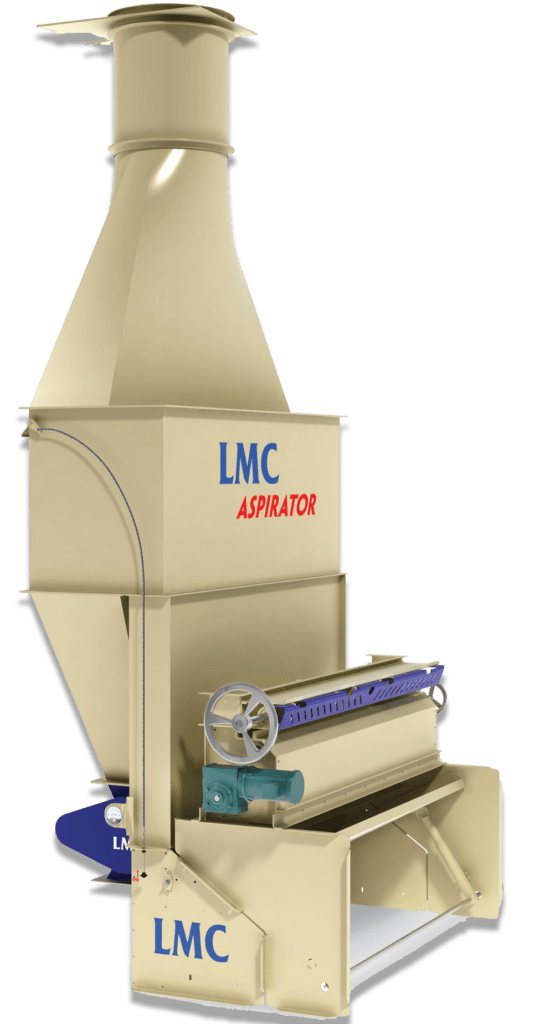
Aspirator — pre-cleaning equipment for seed and grain, supplied by Vistasort

An aspirator removes lightweight foreign material from grain and seed streams using controlled airflow — dust, chaff, hulls, broken seeds, and light immature kernels that carry through from harvest.

The machine draws air across a falling curtain of product, lifting off low-density material while heavier seed passes through to the clean discharge. In seed cleaning lines, aspirators are positioned early in the process to remove bulk light material before the product reaches air screen cleaners, reducing load on downstream equipment and improving overall line efficiency. Aspirators are used across wheat, canola, peas, lentils, flaxseed, and grass seed operations where dusty or chaffy conditions make pre-cleaning essential. On high-volume lines handling field-run product from the combine, an aspirator at intake can reduce light material substantially before primary cleaning begins. Vistasort configures aspirators by product density, throughput, and downstream line requirements.

View Aspirators →
Pre-Cleaning

Magnetic Separator

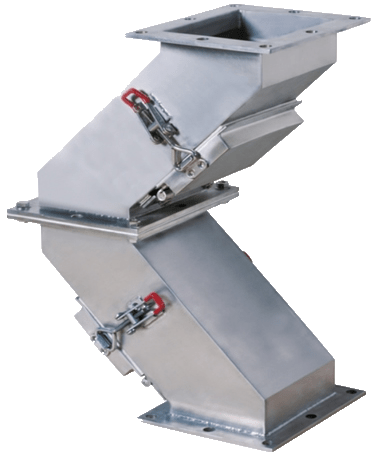
Magnetic Separator — ferrous metal removal for grain and seed, supplied by Vistasort

A magnetic separator removes ferrous metal contaminants — bolts, wire fragments, equipment wear particles, and metallic field debris — from grain and seed streams before product reaches processing equipment downstream.

Ferrous metal contamination is a universal risk in field-harvested product and can cause catastrophic damage to high-speed processing equipment including impact hullers, gravity separators, and color sorters if not removed at intake. Magnetic separators are designed for inline installation on bucket elevators, conveyors, or spout lines, capturing ferrous particles with a permanent magnet or electromagnetic drum as product flows past. In food-grade processing and certified seed operations, magnetic separation is often required at multiple points in the line under food safety and seed certification protocols. Vistasort installs magnetic separators as a standard element of all complete processing line designs and recommends inline magnetic protection ahead of any high-speed mechanical equipment.

View Magnetic Separators →
Primary Cleaning

Air Screen Cleaner

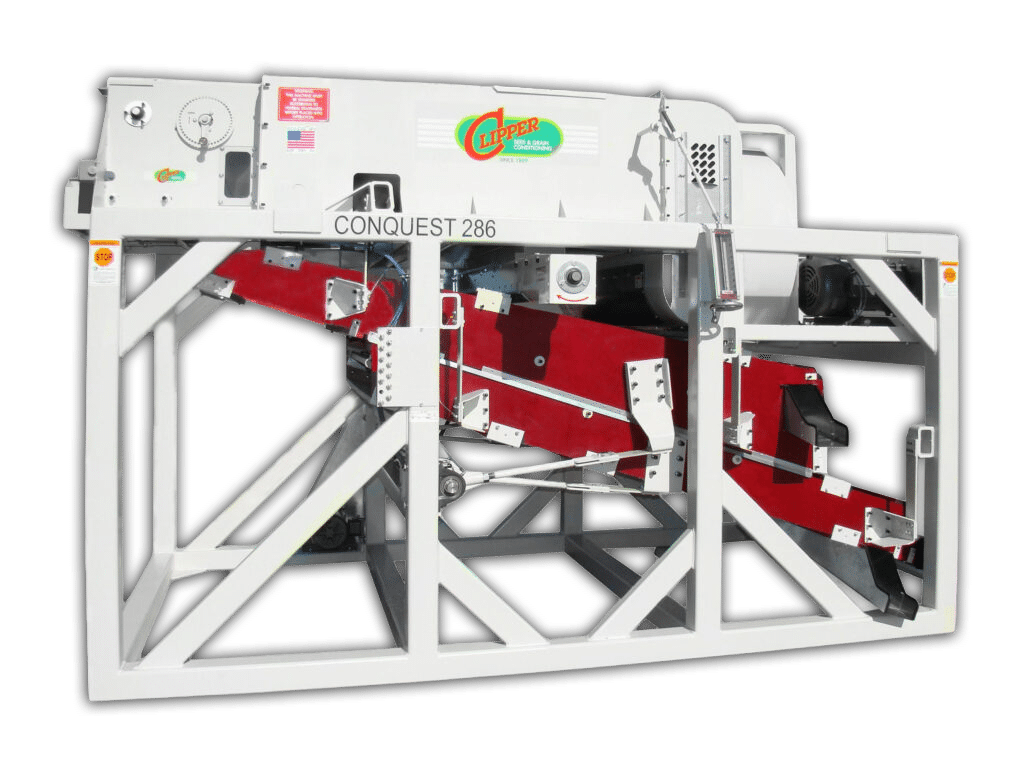
Clipper Conquest 286 air screen cleaner — seed cleaning equipment Canada, supplied by Vistasort

An air screen cleaner is the workhorse of any seed cleaning or grain processing line — the first major separation step after intake, removing foreign material by size and weight.

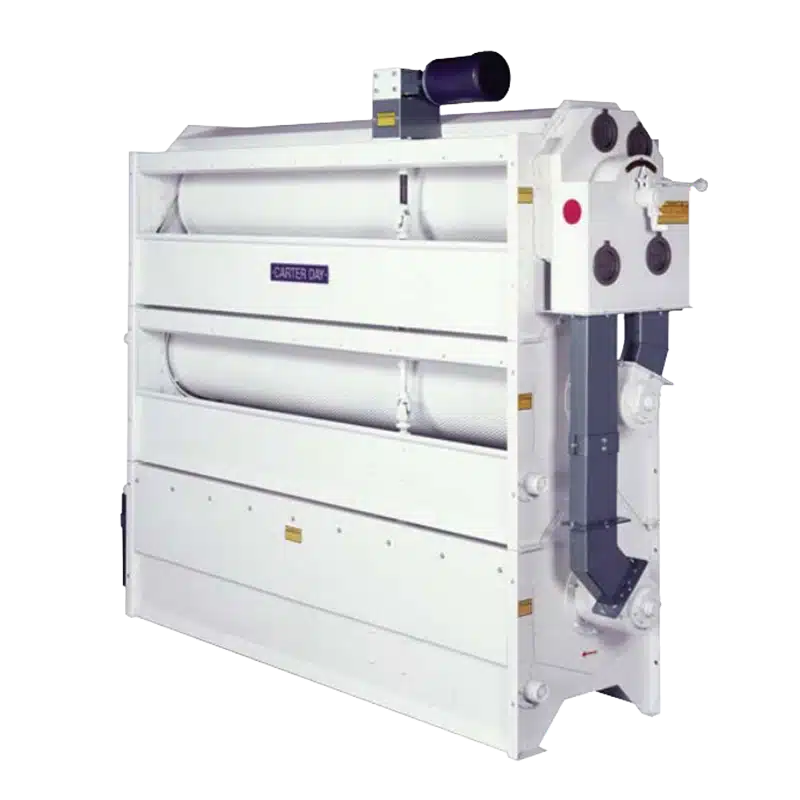
The machine uses two screens to scalp oversized material and remove undersized seed, while aspiration blowers simultaneously lift off dust, chaff, and light kernels. Vistasort supplies Clipper and Carter Day air screen cleaners scaled from on-farm operations to high-volume commercial processing facilities. Clipper machines are built for continuous-duty performance across wheat, barley, canola, lentils, peas, and grass seed. Carter Day heavy-duty models are engineered for commercial operations handling large volumes at high throughput. Correct screen selection is critical — Vistasort stocks a full range of wire mesh and perforated plate screens for virtually every crop and separation requirement, with sizing guidance provided based on your target crop and grade specifications.

View Clipper Cleaners →
Primary Cleaning

Sizing Shaker

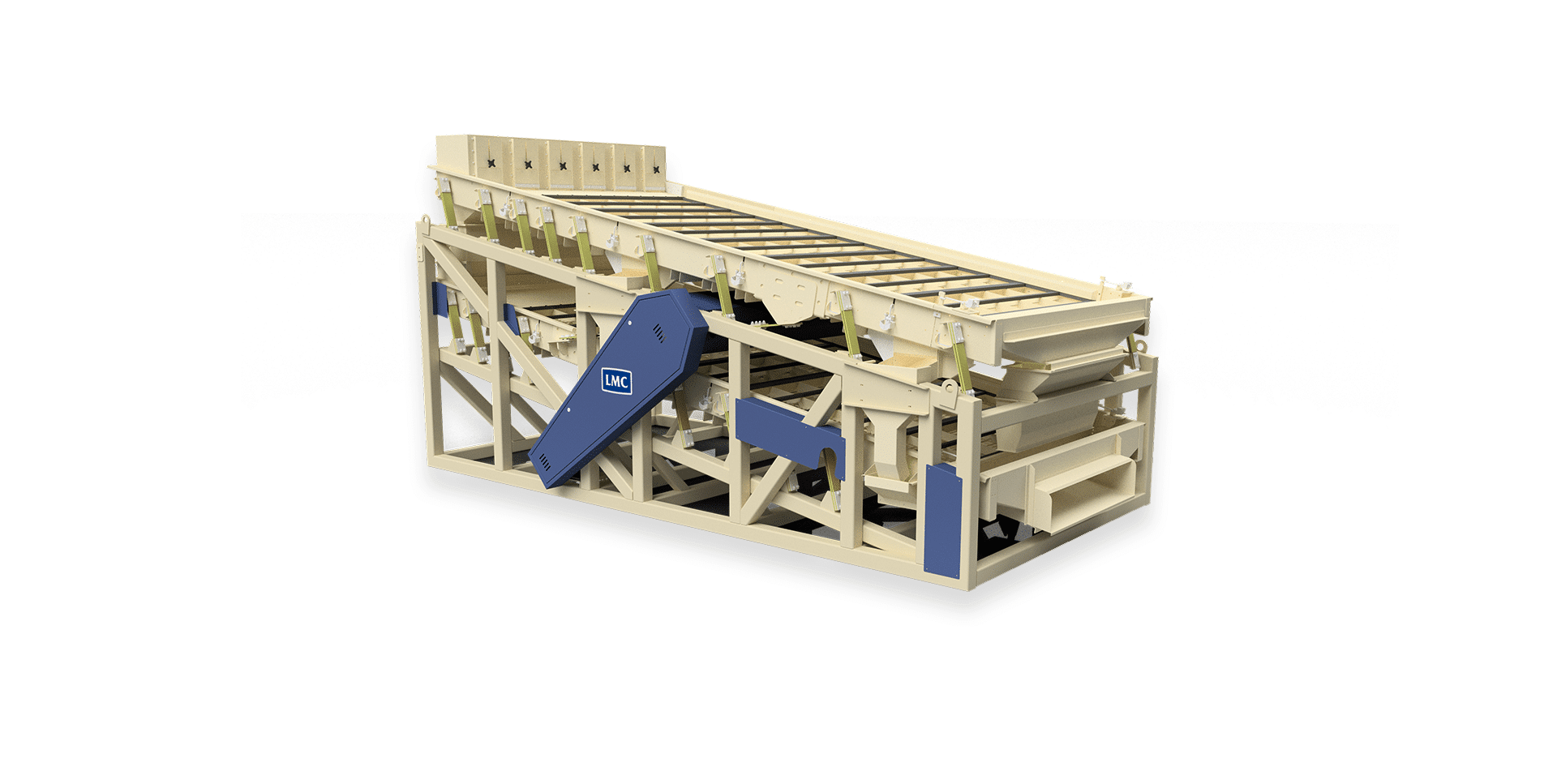
Sizing Shaker — seed and grain sizing equipment, supplied by Vistasort

A sizing shaker uses a set of vibrating screen decks to classify seed and grain by physical dimension — separating product into multiple size fractions for grading, packaging, or further processing.

Unlike an air screen cleaner, a sizing shaker provides more precise, controlled sizing across multiple decks simultaneously, making it suitable for operations requiring close-tolerance separation into two or more distinct fractions. Sizing shakers are used in pulse processing to size lentils and peas into export grade fractions, in seed production to separate small-seeded grasses by size class, and in malt barley operations where kernel plumpness is a primary grading criterion. In a complete processing line, sizing typically follows primary cleaning, gravity separation, and color sorting — handling the final dimensional classification before bagging or bulk loading. Vistasort selects screen configurations based on the target crop's dimensional characteristics and the grade specifications required by the buyer or export market.

View Sizing Shakers →
Secondary Separation

Density, Length & Shape Separation

Where screens and air reach their limits — separating what looks identical but differs in density, length, or shape.

Heavy Contamination

Destoner

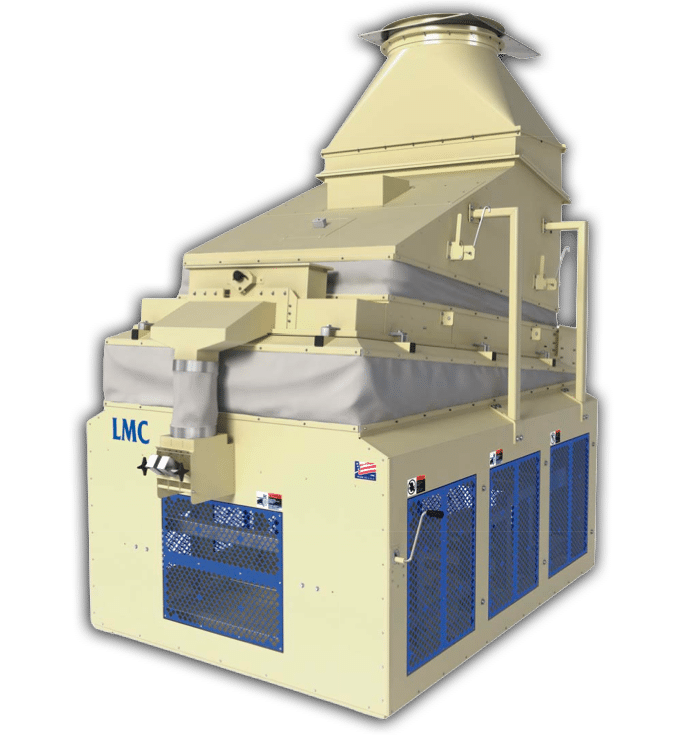
LMC Destoner — stone and heavy foreign material removal, supplied by Vistasort

A destoner removes stones, dirt clods, glass, metal, and other high-density foreign material from grain and seed streams — material that passes through air screens because it is present in small quantities but poses significant risk to downstream equipment and food-safety compliance.

The machine uses a combination of airflow and a vibrating inclined deck to float lighter seed upward while heavy contaminants travel downhill against the airflow and discharge at the heavy end. LMC destoners supplied by Vistasort are widely used in lentil, chickpea, pea, and soybean processing where stone contamination from field harvest is common and a single stone in a food-grade product can cause a buyer rejection. In malt barley and food-grade wheat lines, destoning before packaging is often required as a purchase condition. Vistasort sizes destoners based on throughput and contaminant density, with lab sample testing available to confirm separation performance before installation.

View Destoners →
Density Separation

Gravity Separator

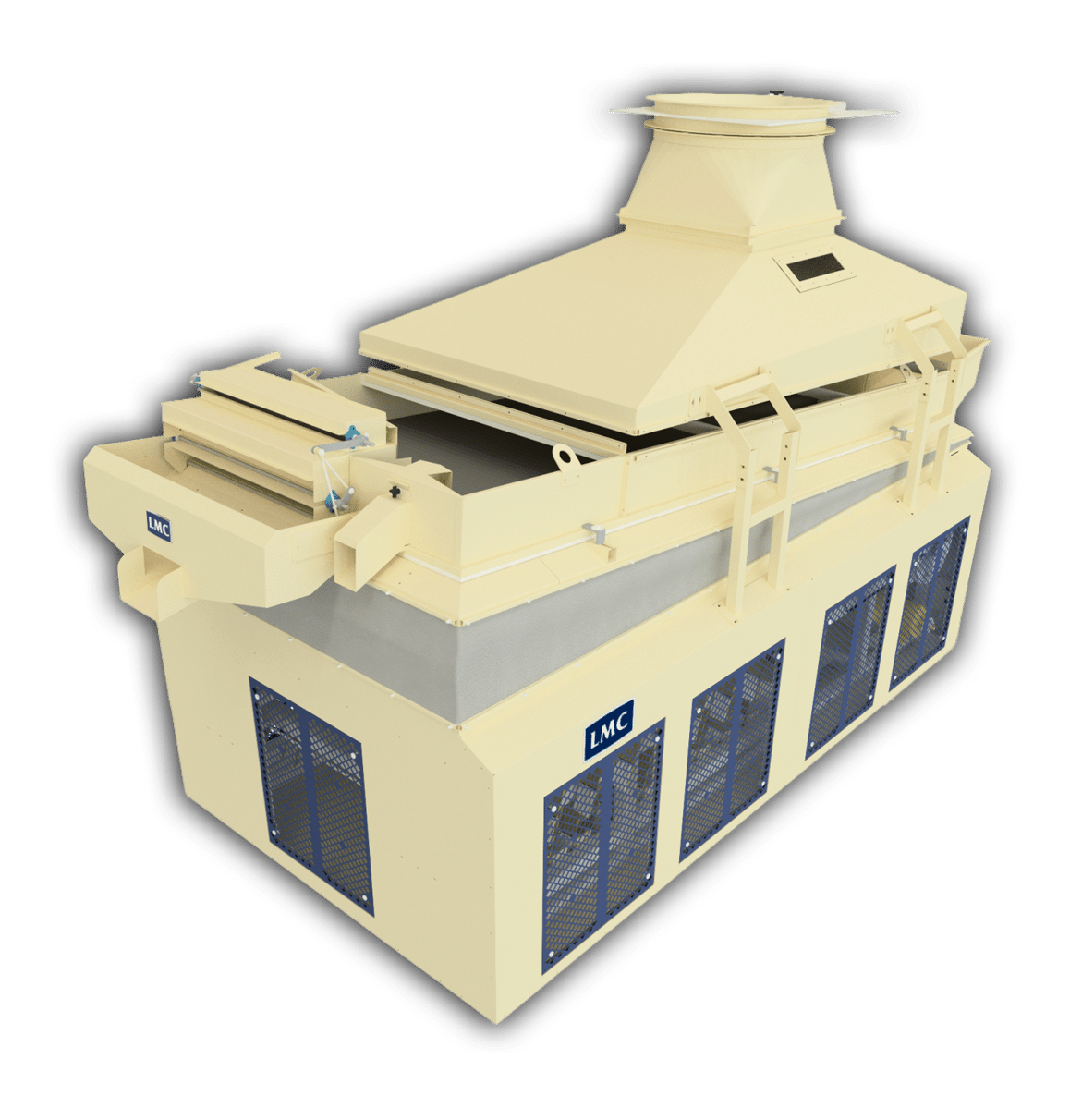
LMC Gravity Separator — density-based seed and grain separation, supplied by Vistasort

A gravity separator sorts seed and grain by density — removing lightweight, shrivelled, or immature kernels that are identical in size and colour to healthy seed but differ in mass.

The machine uses airflow, vibration, and a tilted reciprocating deck to stratify product into density layers, with heavy product discharging from the upper end and light product from the lower end. Density separation is the only reliable method for removing ergot bodies from cereal crops, immature seeds from pulse crops, and frost-damaged kernels from wheat and canola destined for Canadian Grain Commission export grading. Vistasort supplies LMC gravity separators, sized and configured based on throughput, target crop, and grade specification. In a complete processing line, the gravity table typically follows air screen cleaning and destoning, providing density-based refinement before optical color sorting. Lab sample testing is available before purchase.

View Gravity Separators →
Length Separation

Indent Separator

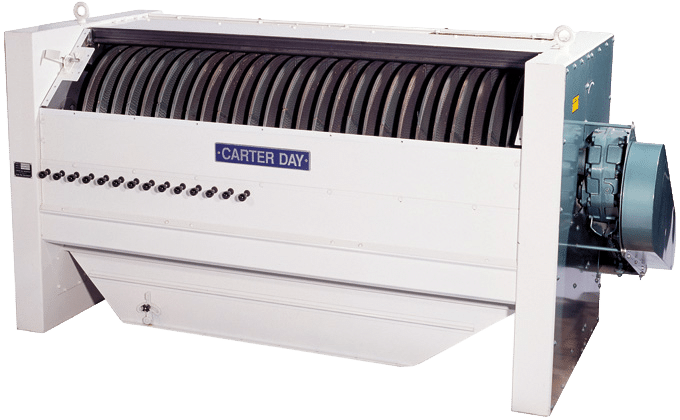
Carter Day Indent Separator — length-based seed separation, supplied by Vistasort

A Carter Day indent separator — also called a length grader — classifies seed by length using a rotating drum lined with precisely sized pocket-shaped indentations. Short seeds lodge in the pockets and are lifted out of the main stream, while longer seeds roll along the drum surface and discharge separately.

This separation is impossible to achieve with screens or airflow alone. In Western Canadian pulse and cereal processing, indent separators are essential for removing wild oat from wheat, short round weed seeds from lentils, and broken seed fractions from otherwise-clean product streams. Vistasort configures Carter Day indent separators by pocket diameter, drum speed, and trough height based on the specific length differential between target crop and contaminant. In a complete processing line, the indent separator typically follows primary air screen cleaning and gravity separation, handling the precise separations that require dimensional precision beyond what screens can achieve.

View Indent Separators →
Shape Separation

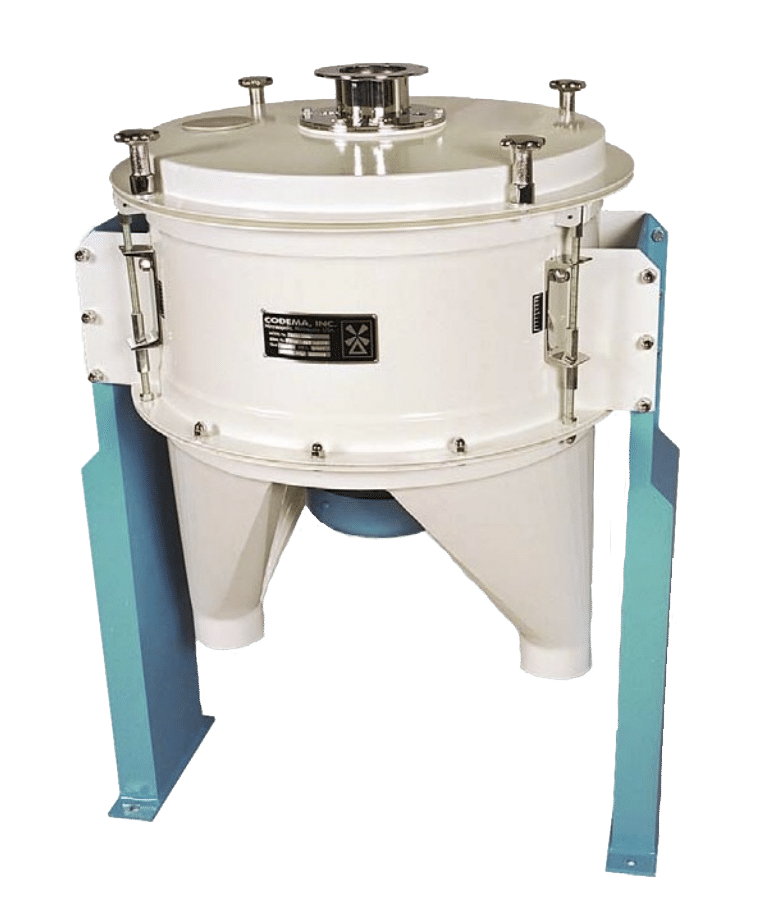
Disc Machine

Codema Disc Machine — shape-based seed separation, supplied by Vistasort

A Codema disc machine separates seeds by shape and surface texture using a series of rotating discs, each carrying precisely sized pockets that capture seeds of a specific shape profile.

Seeds with the correct shape fall into the pockets and are carried to a separate discharge, while differently shaped seeds remain on the disc face and exit through the main stream. This principle is most effective for separating round seeds from flat seeds — buckwheat from wheat, round weed seeds from elongated crop seed, or clover from grass seed — where length-based or density-based separation alone is insufficient. Codema disc machines supplied by Vistasort are used in specialty seed cleaning operations handling grass, clover, alfalfa, and specialty oilseed crops where variety purity standards require precise shape-based separation. Disc size, rotation speed, and the number of decks are selected based on the specific crops being separated and the purity specification required.

View Disc Machines →
Shape Separation

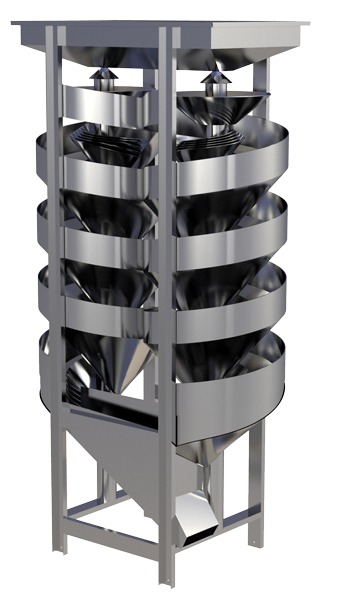
Spiral Separator

Spiral Separator — gravity shape separation for seed cleaning, supplied by Vistasort

A spiral separator uses gravity and the rolling characteristics of individual seeds to achieve shape-based separation without mechanical pockets or screens — the simplest and most reliable separation method for spherical seeds.

Product is fed onto a multi-turn spiral chute; round seeds gather speed and centrifugal force as they roll outward to a separate discharge, while flat, elongated, or irregular seeds travel down the inner track. This separation is particularly effective for removing round weed seeds from cereal crops, separating peas from vetch or wild pea, and cleaning ryegrass from fescue in grass seed operations. Spiral separators require no power beyond the feed conveyor, making them low-maintenance and low-operating-cost additions to existing seed cleaning lines. In commercial seed cleaning plants, spirals are often used in banks of multiple units to achieve high throughput on difficult shape separations.

View Spiral Separators →
Optical Sorting & Finishing

The Final Stages Before the Bag

Color sorting, polishing, and hulling — the last processing steps before seed treating or packaging begins.

Optical Sorting

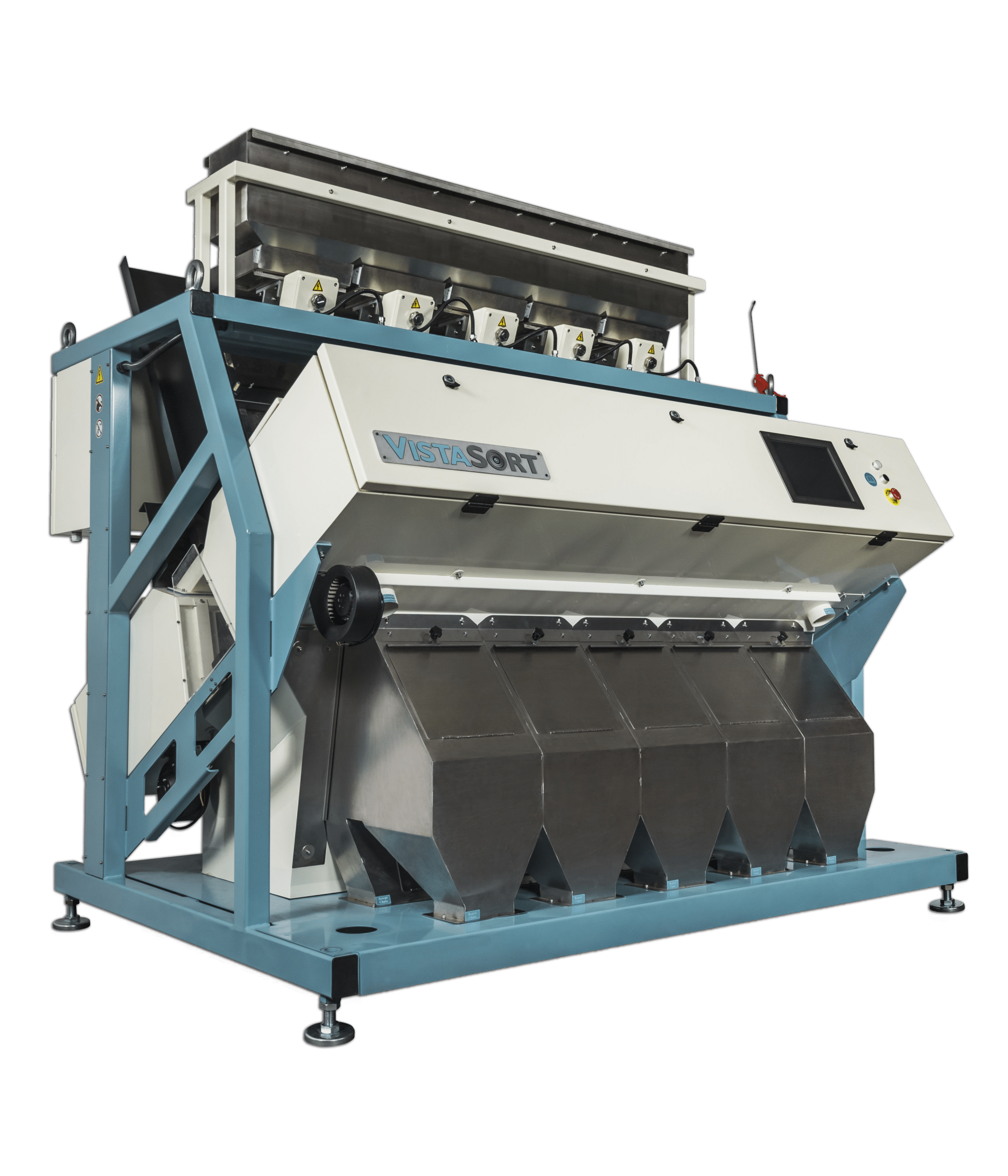
VistaSort Color Sorter

VistaSort 5-Chute Optical Color Sorter — developed and manufactured by Vistasort, 150+ installed across Canada and the US

The VistaSort optical color sorter is manufactured by Vistasort — the only machine in our lineup we build ourselves. Developed in 2011, it uses high-speed CCD and near-infrared cameras to identify and eject individual seeds based on colour, removing discoloured, damaged, or foreign material that passes through every other stage of the cleaning line.

With over 150 VistaSort units installed across Canada and the United States, the machine has proven itself across wheat, canola, lentils, chickpeas, field peas, soybeans, malt barley, sunflowers, grass seed, and food-grade specialty crops. Near-infrared detection enables sorting of defects invisible to the human eye — internal damage, surface contamination, and moisture variation in translucent seeds. Air ejectors respond in real time, removing off-colour material without disrupting the main stream. The VistaSort delivers commercial-grade sorting performance at a price point accessible to Canadian processors of all sizes.

View the VistaSort Color Sorter → Visit vistasortcolorsorter.com →
Finishing

Bean Polisher

Bean Polisher — surface finishing for lentils, peas, and pulse crops, supplied by Vistasort

A bean polisher removes the fine dusty surface film from dry beans, lentils, chickpeas, and other pulse crops — improving visual appearance, reducing dust during handling, and meeting the presentation standards required by domestic food buyers and export markets.

The machine uses a rotating brush or abrasive drum to gently scour the seed surface, removing the powdery deposit that accumulates during harvest and cleaning without damaging the seed coat. Polishing is standard practice in food-grade pulse processing where visual quality is a purchase decision factor — retail buyers, food processors, and export packers consistently specify polished product. Bean polishers supplied by Vistasort are used in lentil, chickpea, and pea processing facilities across Western Canada, typically positioned as the final processing step before packaging. Throughput, abrasion intensity, and screen configuration are adjusted based on crop type and the degree of surface treatment required.

View Bean Polishers →
Finishing

Impact Huller

Impact Huller — seed and grain dehulling equipment, supplied by Vistasort

An impact huller removes seed hulls, outer coats, or fibrous coverings from grain and oilseed crops using controlled mechanical impact — without crushing or damaging the inner kernel.

The machine accelerates product against an impact surface at a controlled velocity calibrated to crack and release the hull while leaving the interior seed intact. Impact hulling is used in oat processing to produce groats, in sunflower processing for dehulling before oil extraction or food processing, in buckwheat processing for groat production, and in hemp seed processing for hulled heart production. Impact hullers are sized and configured based on the target crop, hull thickness, and required throughput and dehulling efficiency. In complete processing lines, the impact huller typically follows pre-cleaning and destoning and precedes gravity and optical sorting to separate hulled from unhulled product.

View Impact Hullers →
By Crop Type

Equipment by Crop Application

Different crops require different equipment combinations. Here is how Vistasort configures processing lines for the major Western Canadian crop types.

Cereals

Wheat, Barley, Oats & Durum

Cereal cleaning lines focus on removing weed seeds, ergot, stones, and frost-damaged kernels. For malt barley, kernel plumpness sizing is a primary grading requirement.

  • Air screen cleaner — primary cleaning and sizing
  • Destoner — stone and dirt clod removal
  • Gravity separator — ergot and frost-damaged kernel removal
  • Indent separator — wild oat and round weed seed removal
  • VistaSort color sorter — discoloured and diseased kernel removal
  • Impact huller — oat groat production (oats only)
Pulses

Lentils, Peas & Chickpeas

Pulse cleaning lines require aggressive destoning (field stone contamination is high), precise sizing for export grade fractions, and food-grade finishing for retail markets.

  • Aspirator — removal of chaff and light foreign material at intake
  • Air screen cleaner — primary cleaning and initial sizing
  • Destoner — critical for stone-prone pulse harvest
  • Gravity separator — removal of shrivelled and immature seed
  • Sizing shaker — export grade fraction separation
  • VistaSort color sorter — discoloured and damaged kernel removal
  • Bean polisher — visual finish for food-grade and retail product
Oilseeds

Canola, Flaxseed & Sunflower

Oilseed processing focuses on foreign material removal, density separation for oil content optimization, and hulling for sunflower destined for food-grade markets.

  • Air screen cleaner — primary cleaning
  • Gravity separator — density separation for oil quality grading
  • VistaSort color sorter — green seed and damaged kernel removal (canola)
  • Impact huller — sunflower dehulling for food-grade applications
  • Magnetic separator — ferrous metal protection ahead of hullers
Specialty & Grass Seed

Grass, Clover, Alfalfa & Specialty

Specialty seed and grass seed processing requires the most precise separations — variety purity standards are strict and seed lots are often high-value certified seed.

  • Air screen cleaner — primary cleaning for small-seeded crops
  • Indent separator — length-based weed seed removal
  • Disc machine — shape-based separation for grass and clover
  • Spiral separator — round weed seed removal from fine grass
  • Gravity separator — density upgrade for certified seed production
  • VistaSort color sorter — colour-based variety purity upgrade
Why Vistasort

40 Years Supplying Seed Cleaning Equipment Across Canada

When it comes to seed cleaning equipment in Canada, Vistasort has been the trusted name since 1986 — supplying and supporting grain processing operations across Western Canada. Steven Chivilo — President, Master's Certificate in Grain Operations Management from Kansas State University, active PMP, and recipient of the 2025 Alberta Seed Processors Outstanding Service Award — has spent 40 years learning what works in Canadian conditions.

Chris Hammel, Sales Manager and 40-year Vistasort veteran, is one of the most trusted voices in the Canadian seed cleaning industry. Together, they have supplied thousands of machines to operations ranging from individual farms to complete turnkey processing plants.

Parts are stocked in Saskatoon. Support is direct. When something needs attention, you are not calling a distributor in another country — you are calling the same people who helped you select and install the machine.

  • Canadian-owned and operated from Saskatoon since 1986
  • Turnkey plant design and build — Strathmore, Galloway Seeds, Starland, Camrose County
  • 150+ VistaSort color sorters installed across Canada and the US
  • Equipment selected for your crop, grade targets, and throughput
  • Lab sample testing available before purchase
  • Parts and service support from Saskatoon
VistaSort
Vistasort's own optical color sorter — developed in 2011, 150+ units installed across Canada and the US. CCD and near-infrared detection.
Clipper
North America's most established name in air screen cleaning. Vistasort has supplied Clipper cleaners to Canadian operations since 1986.
Carter Day
Industrial-grade air screen cleaners and scalpers for high-volume commercial operations handling large tonnage across multiple crop types.
LMC
Gravity separators and optical color sorters with decades of proven performance in cereal, pulse, oilseed, and food-grade processing.
Codema
Disc machines for shape-based seed separation — used in specialty seed, grass, clover, alfalfa, and oilseed cleaning where precise shape separation is required.
Common Questions

Frequently Asked Questions

What is the difference between a gravity separator and a destoner?
A destoner removes heavy, dense foreign material — stones, dirt clods, glass — that is denser than the crop seed. A gravity separator separates within the seed lot itself, sorting light, shrivelled, or immature kernels from heavy, well-filled ones. Both machines use airflow and vibration, but they target different density ranges. In most processing lines, the destoner is used first to remove obvious heavy contaminants, followed by the gravity separator for precision density grading of the crop itself.
What seed cleaning equipment do I need for lentils and peas?
A typical lentil or pea cleaning line includes an air screen cleaner to remove field debris and off-size material, a destoner to remove stones from field-harvested pulse crops, a gravity separator to remove shrivelled or lightweight seeds, and a VistaSort optical color sorter to remove discoloured or damaged kernels before export or food-grade packaging. A bean polisher is added in food-grade lines where visual presentation is a buyer requirement. Contact Vistasort to configure a line for your throughput and grade targets.
How does the VistaSort optical color sorter work?
The VistaSort uses high-speed CCD cameras and near-infrared sensors to scan individual seeds or kernels as they fall through the machine. When the sensors detect a seed that does not match the accepted colour or reflectance profile, a precisely timed air ejector removes it from the stream. Near-infrared detection identifies defects invisible to the human eye, including internal damage and surface contamination. The VistaSort was developed by Vistasort in 2011 and now has over 150 units installed across Canada and the United States.
What equipment is used for ergot removal from wheat?
Ergot removal in wheat typically requires a combination of gravity separation and optical color sorting. Ergot bodies have a different density profile from wheat kernels, making a gravity separator effective for removing the bulk of contamination. A VistaSort optical color sorter then removes remaining ergot bodies based on their distinctive dark purple-black colour. Ergot tolerances in Canadian wheat are set by the Canadian Grain Commission and vary by grade — Vistasort configures ergot removal lines to meet your target grade specification.
Can Vistasort supply a complete seed cleaning line or just individual machines?
Both. Vistasort supplies individual machines for operations adding capacity or replacing equipment, and also designs and builds complete turnkey seed cleaning and grain processing plants from the ground up. Completed plant projects include the Strathmore Seed Cleaning Plant, Galloway Seeds, Starland Seed Plant, and Camrose County Seed Cleaning Plant. For new facilities, Vistasort provides 3D facility layout design, equipment selection, conveyance integration, installation, commissioning, and operator training.
What is the difference between an air screen cleaner and a gravity separator?
An air screen cleaner separates seed by physical size — screens remove material that is too large or too small, while aspiration removes lightweight material. A gravity separator separates seed by density — it can distinguish between two kernels identical in size but different in weight. Both machines are standard in most commercial processing lines. The air screen cleaner handles bulk separation first, and the gravity separator follows to refine the product by density.
Does Vistasort supply equipment for on-farm seed cleaning?
Yes. Vistasort supplies on-farm seed cleaning equipment scaled for individual farm operations, including Clipper air screen cleaners in farm-scale models, aspirators, and small gravity separators. On-farm equipment is selected based on your acres, crop mix, and whether you are cleaning for retained seed, certified seed production, or direct sale. Contact Vistasort to discuss your farm's specific requirements.

Ready to Talk Equipment?

Whether you are replacing a single machine or building a complete processing line, Vistasort is the seed cleaning equipment supplier Canada's processors have relied on for 40 years. Lab sample testing available. No obligation.

Call +1-306-242-9292  |  Toll-free +1-800-667-6924  |  info@vistasort.com