
Stones, splits, and surface dust cost pulse processors grade and dollars in ways cereal cleaning never has to solve. Vistasort configures edible bean and pulse cleaning equipment for lentils, peas, beans, and chickpeas — including the final polishing step that gets product export-ready.
Lentils, peas, beans, and chickpeas don't share cereal grain's cleaning problems — they have their own. Stone contamination is a bigger risk in pulses than in most cereals, since stones are often close enough in size to the crop that screening alone can't catch them. Splits and cracked seed hurt grade. And unlike cereals, most pulse crops destined for premium retail or export markets need a final surface finish that cleaning alone doesn't deliver.
That finishing step — bean polishing — is the piece of equipment most cereal lines never need and most pulse lines can't skip if they're selling into visual-grade-sensitive markets. Vistasort configures the full line around it: aspiration, screening, destoning, gravity separation, sizing, color sorting, and polishing, built to the crop and grade you're actually shipping.
LMC has engineered pulse processing equipment since 1941, and Vistasort has supplied and supported it across Western Canada since 1986 — including the LMC Bean Polisher, LMC Roca Destoner, and LMC Marc Gravity Separator that anchor most edible bean lines Vistasort configures.
A complete pulse cleaning line runs more stages than a cereal line — the polishing step at the end is what makes it different. Not every crop needs every piece; see the crop table below for what applies where.
Removes light material and dust before primary screening.
Clipper primary separation — scalps oversized material, removes fines.
Carter Day length-based separation for foreign seed removal.
Density-based stone and heavy foreign material removal.
Removes splits, immature seed, and lightweight contaminants.
Grades product into size fractions for export specifications.
Final finishing step — removes surface dust for market-ready shine.
Optical removal of discoloured, diseased, or off-type product.
Gentle product movement between stages without cracking seed.
Protects equipment and product from ferrous metal contamination.
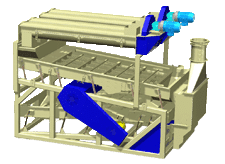
Harvesting, drying, and cleaning leave a fine dusty film on the seed coat of edible beans and lentils — invisible to the naked eye at a glance, but directly tied to buyer perception and market grade. The LMC Bean Polisher removes it, blending sawdust or rice hulls with the product through a gentle auger system that restores a bright, uniform finish without cracking sound seed.
It's standard practice for navy beans, black beans, pinto beans, kidney beans, and chickpeas headed to premium retail or export markets — and it's the one machine on this page that has no equivalent in a cereal cleaning line.
Lentils, peas, beans, and chickpeas share the same core equipment but need different configuration decisions. Contact Vistasort for exact screen and configuration specs — seed dimensions vary by variety and harvest year.
| Crop | Primary Separation Objective | Key Challenges | Equipment Path |
|---|---|---|---|
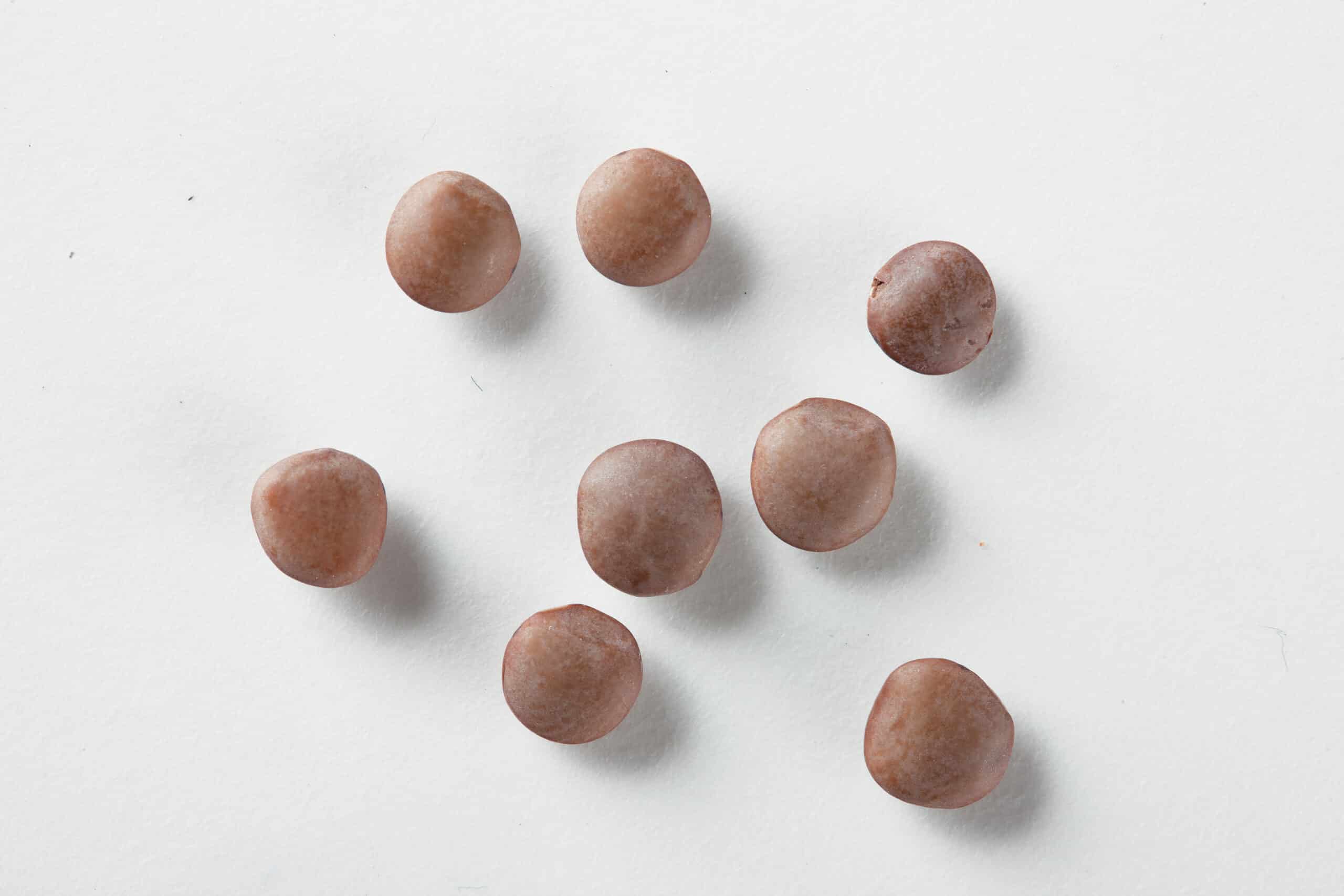 Red Lentils Red Lentils | Export grade sizing — multiple fractions | Stone contamination; broken/cracked lentils | Destoner Sizing Shaker Color Sorter |
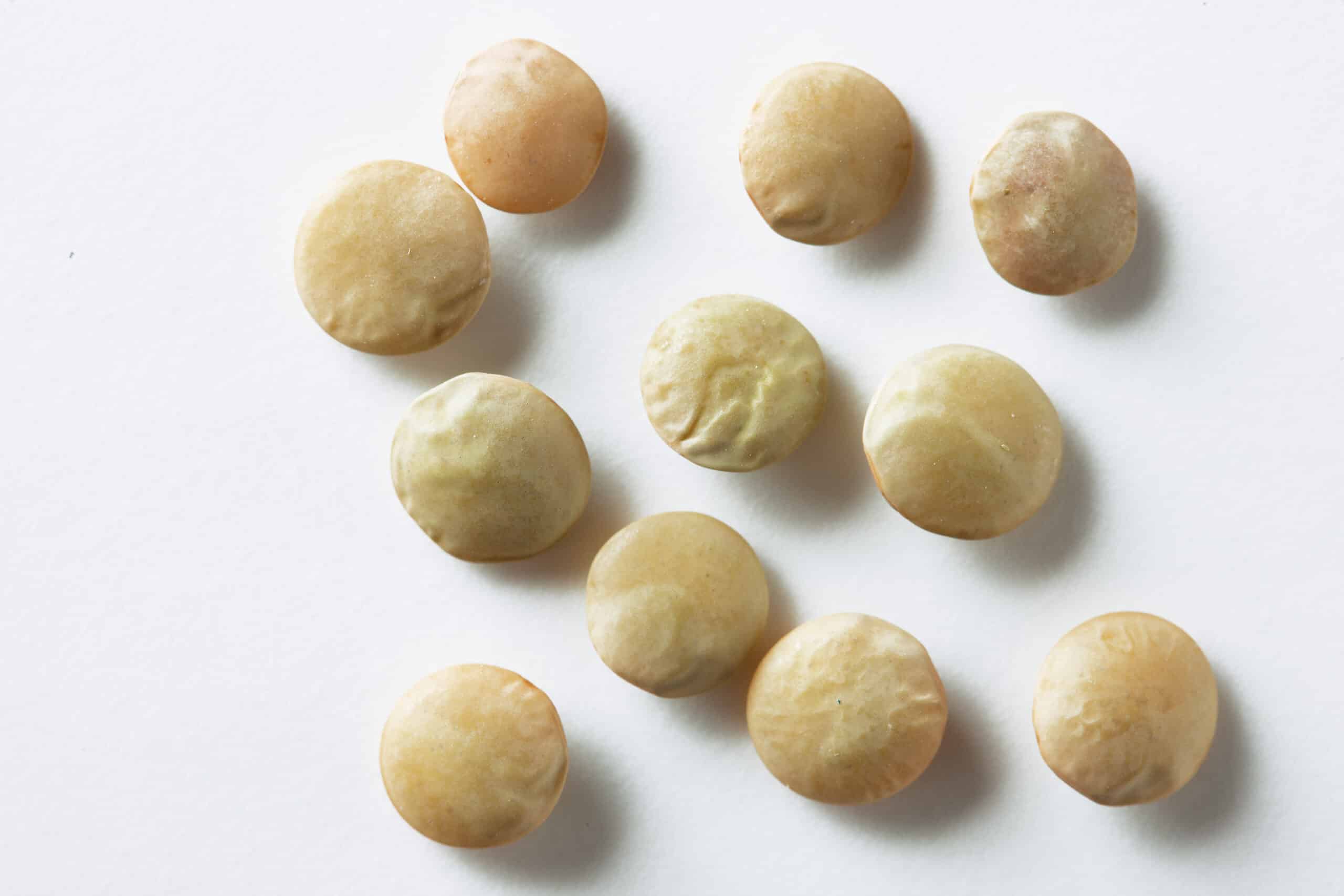 Green Lentils Green Lentils | Foreign material removal; grade sizing | Stones; damaged seed from harvest | Destoner Gravity Sep. Color Sorter |
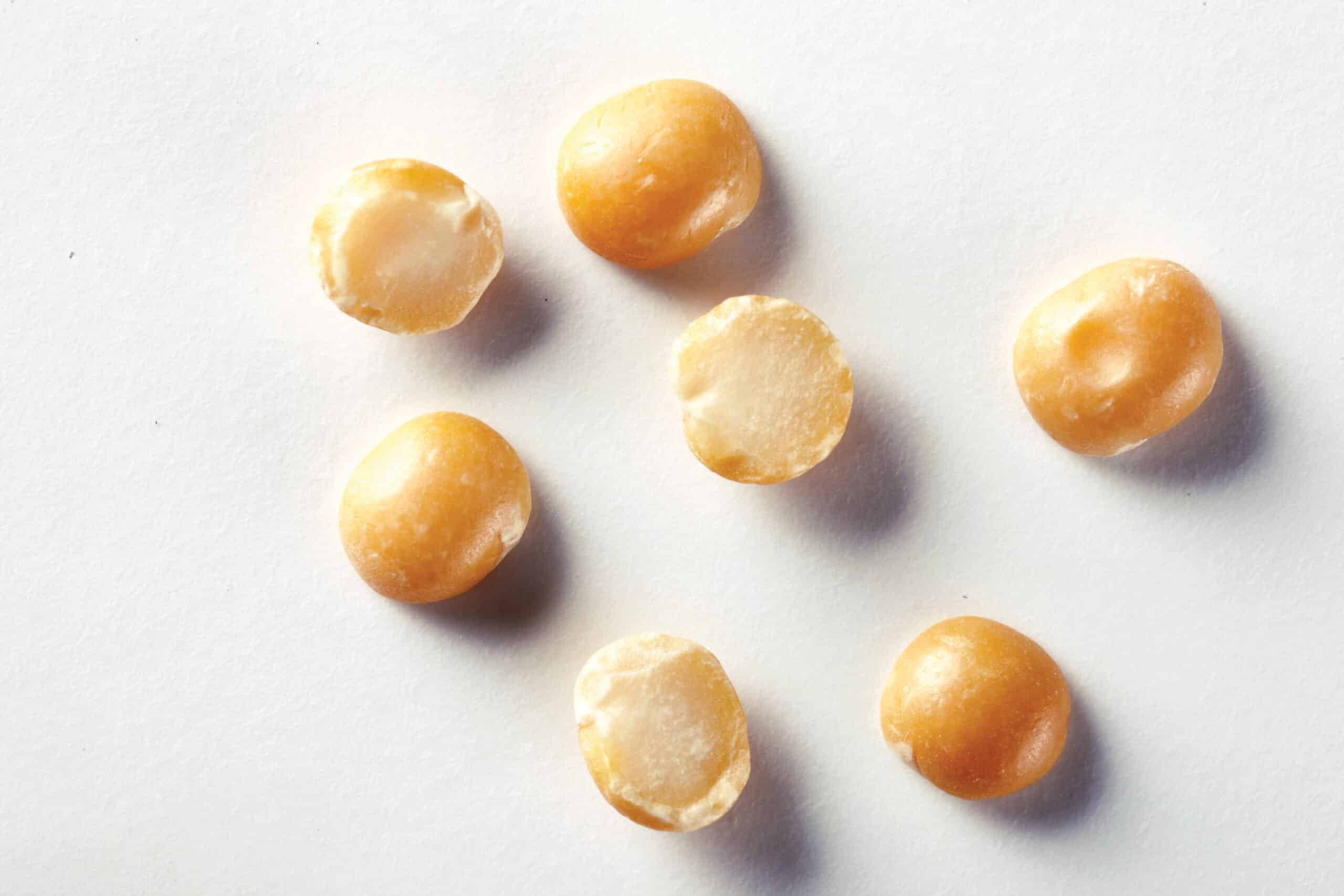 Yellow Peas Yellow Peas | Scalp straw and pods; remove fine debris | High stone risk; large seed requires wider spacing | Destoner Bean Polisher Color Sorter |
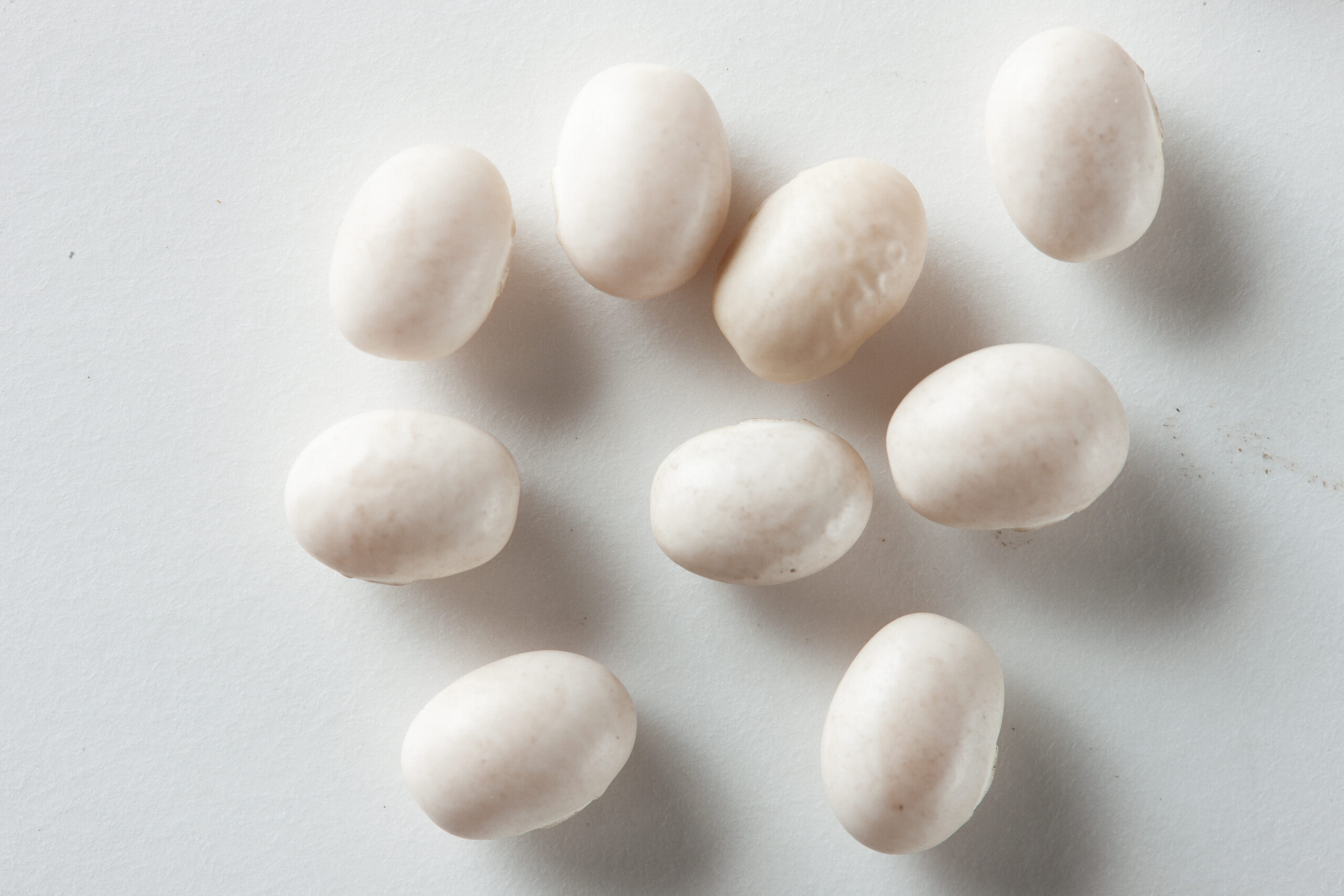 Navy Beans Navy Beans | Foreign material; broken bean removal; retail finish | Splits and cracks are common; visual grade matters | Gravity Sep. Color Sorter Bean Polisher |
 Pinto, Black & Kidney Beans Pinto, Black & Kidney Beans | Scalping; foreign material removal; colour uniformity | Variable seed size by variety; mottled or dark seed coats show dust readily | Destoner Color Sorter Bean Polisher |
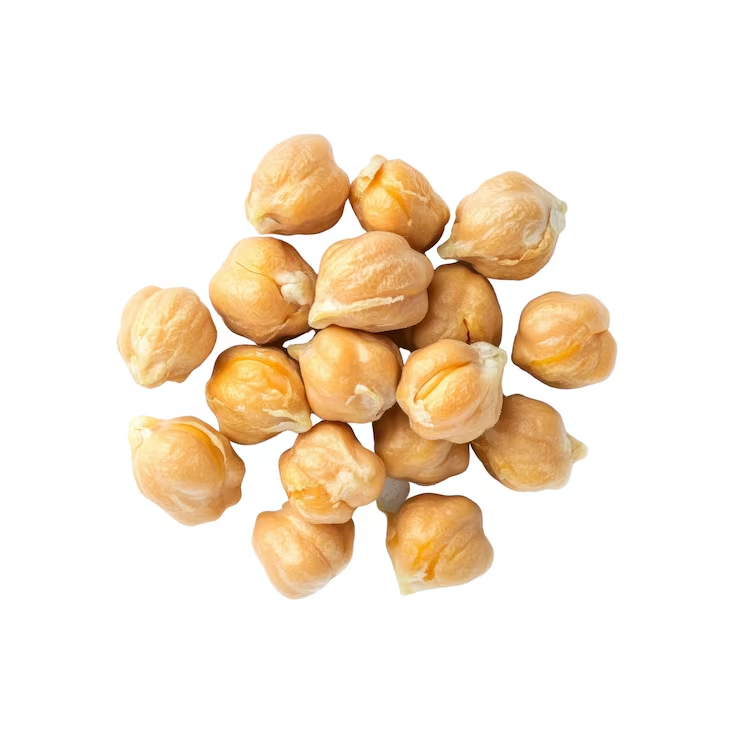 Chickpeas Chickpeas | Export-grade surface finish; foreign material removal | Firm seed coat; surface dust common ahead of export | Destoner Bean Polisher |
✱ This table provides general directional guidance only. Grade and dockage tolerances follow Pulse Canada and Canadian Grain Commission specifications. Contact Vistasort for crop-specific equipment recommendations before ordering.
Not sure which configuration fits your crop? Send a sample and we'll show you exactly what a properly configured pulse line removes, no obligation.
Request a Free Lab Sample TestFive stages, not four — pulse lines add a finishing step after color sorting that most cereal lines skip entirely.
Scalping and initial air separation remove large trash, straw, and light material at harvest intake, before the product reaches primary screening.
Air and screen separation removes fines, weed seeds, and off-size material by size and aerodynamic profile — the primary separation stage.
Stone removal and gravity separation by density remove damaged, lightweight, and foreign material that screening alone can't catch.
Optical sorting removes discoloured, diseased, or off-type product that passes all physical separation steps.
Sawdust or rice hull polishing removes surface dust and film to deliver a bright, market-ready product — the last machine before packaging, and the step that separates a clean lot from an export-ready one.
These are the four contamination and grading problems that come up most often on edible bean and pulse lines, and the equipment Vistasort configures to solve each one.
Stones are often close enough in size to lentils and peas that screening alone can't separate them — density is the variable that works.
Splits and cracks lower grade and are common in beans handled roughly during harvest, drying, or transport.
A dusty, dull bean reads as lower quality to buyers and inspectors — even when the product underneath is clean and sound.
Export buyers often specify a target size range as part of the purchase contract, especially for red lentils.
Anyone can sell you a destoner. Configuring a pulse line that actually hits your grade takes knowing how stone density, split detection, and surface-finish standards interact with the equipment available to solve them — and knowing when polishing is worth the extra step and when it isn't.
Vistasort is Western Canada's authorized dealer for LMC processing equipment — including the Bean Polisher, Roca Destoner, and Marc Gravity Separator that anchor most pulse lines. Steven Chivilo holds a Master's Certificate in Grain Operations Management from Kansas State University and is PMP certified; Chris Hammel has spent 40 years configuring seed and grain cleaning lines across Western Canada.
Not sure which pieces your line needs? Request a free lab sample test — send us a sample of what you're cleaning and we'll show you what a properly configured line removes.
Send us a sample of the lentils, peas, beans, or chickpeas you're cleaning — we'll show you what properly configured pulse cleaning equipment removes, with no obligation to buy.
Call +1-306-242-9292 | Toll-free +1-800-667-6924 | info@vistasort.com