Clipper and LMC · Seed and Grain Cleaning

Air Screen Cleaners for Seed and Grain Clipper and LMC machines, sized and supported from Saskatoon

An air screen cleaner is the main cleaning machine in almost every seed and grain plant. Vistasort supplies Clipper and LMC air screen cleaners, from a tabletop lab tester to high-capacity commercial machines, and helps you choose the model, screens and setup for your crop.

Want the short version? See how air screen cleaning works ↓

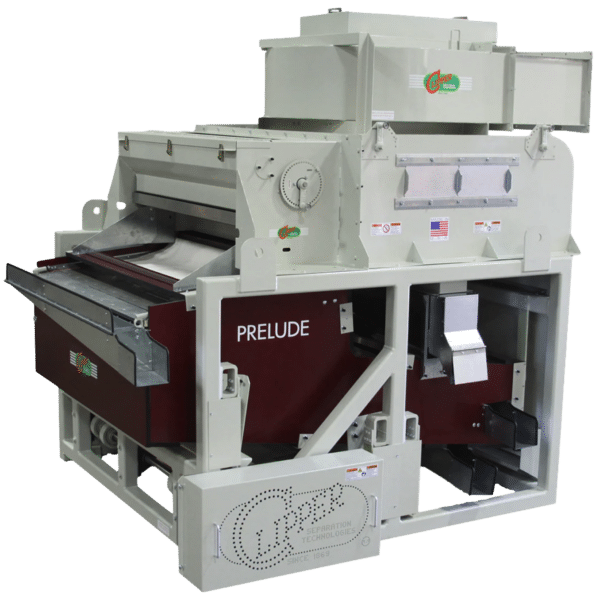
Clipper Prelude 526 air screen cleaner for seed and grainClipper Prelude 526
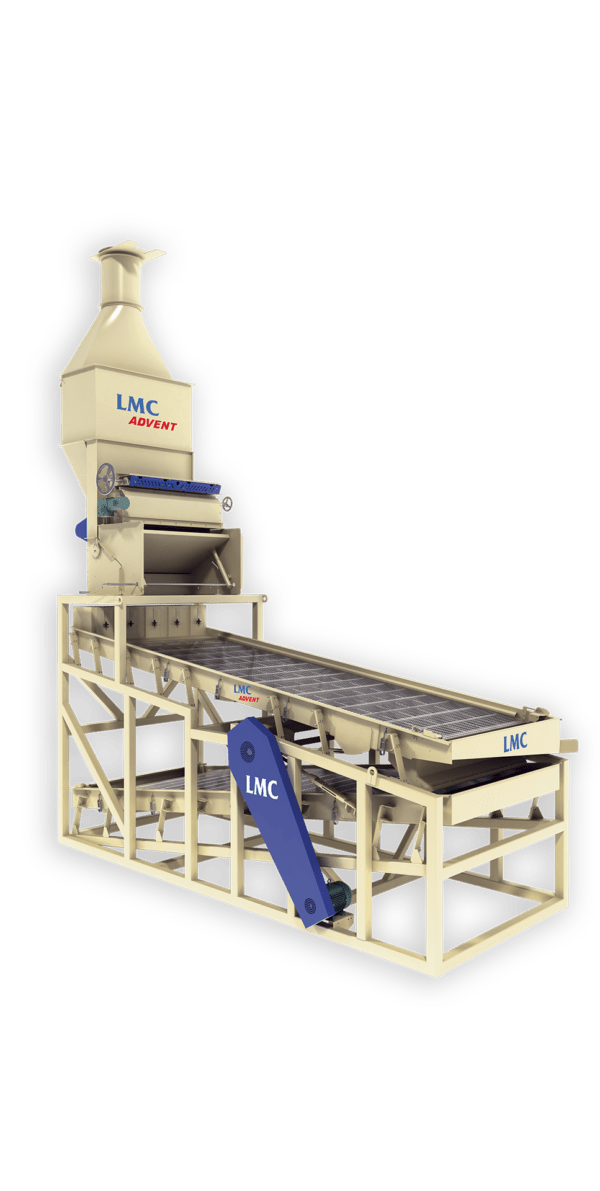
LMC Advent air screen cleaner with its aspirator ahead of the screensLMC Advent
Clipper and LMC · Supplied and supported by Vistasort
40+
Years Supplying Clipper and LMC
14
Clipper Air Screen Cleaner Models
Built to Order
LMC Advent Deck Sizes
Saskatoon
Screens, Parts and Service

What Is an Air Screen Cleaner?

An air screen cleaner is a seed and grain cleaning machine that combines moving air with vibrating perforated screens. Air lifts out dust, chaff and light seed. The top screen scalps off material larger than the crop, and the bottom screen sifts out material smaller than the crop, leaving clean, sized seed.

It is the first real cleaning step in most seed plants and on many farms. Screens sort by width and thickness, and air sorts by how material behaves in a moving air stream. Together they take out most of the dockage before the product reaches a gravity separator, an indent or an optical color sorter.

You will also hear it called a seed cleaner, an air and screen cleaner, an air-screen machine or, on older farm models, a fanning mill. Vistasort supplies two brands: Clipper air screen cleaners and the LMC Advent cleaner.

Separates by
Size, shape and weight in moving air
Screens
2 screens on lab models, up to 8 decks
Air
Before the screens, after them, or both
Outputs
Clean seed, scalpings, fines and liftings
Jobs
Pre-cleaning, market cleaning, precision seed cleaning
Brands we supply
Clipper and LMC

What It Removes

  • Dust, chaff, hulls and light seed
  • Straw, sticks, pods and clods
  • Large and small weed seeds
  • Broken kernels, splits and fines

What Needs the Next Machine

Not Sure Which One You Need?

Compare Clipper and LMC models side by side, or tell us your crop and volume and we will recommend one model and the screens to start with.

Compare Models

How Air Screen Cleaning Works in 6 Steps

Air screen cleaning splits one incoming stream into four: clean seed you keep and three streams of material you don’t. Here is the path the product takes through a two-screen, two-air machine.

1 2 3 4 5 6 DUST + CHAFF LARGETRASH FINES LIGHTSEED CLEAN SEED
Typical two-screen layout with air before and after the screens, as on the Clipper Prelude. Smaller cleaners use one air pass after the screens, and the LMC Advent runs its aspirator before the screens.
  1. FeedA feed roll or vibratory feeder spreads the product in an even, thin curtain across the full width of the screens.
  2. Air before the screensMoving air pulls dust, chaff and light trash out of the falling product and carries it to a cyclone or dust collector.
  3. Scalping on the top screenHoles larger than the seed let good seed drop through, while straw, pods, clods and large weed seeds ride off the end.
  4. Sifting on the bottom screenHoles smaller than the seed let fines, broken kernels and small weed seeds fall through, while good seed rides over.
  5. Air after the screensA final air pass lifts light, shrivelled and immature kernels out of the cleaned seed.
  6. DischargeClean seed, scalpings, fines and liftings leave by separate spouts. Rubber balls bouncing under each screen keep the holes open.
✓ Clean Seed
The product you keep, sized between the top and bottom screens.
Scalpings
Larger than the crop: straw, sticks, pods, clods and large weed seeds.
Fines
Smaller than the crop: broken kernels, small weed seeds and dirt.
Liftings
Lighter than the crop: dust, chaff, hulls and light or shrivelled seed.

Clipper and LMC Air Screen Cleaners

Vistasort supplies and supports both brands. Clipper offers standard models in every size, and the LMC Advent is built to your separation. We help you choose the one that fits your crop, your volume and your plant.

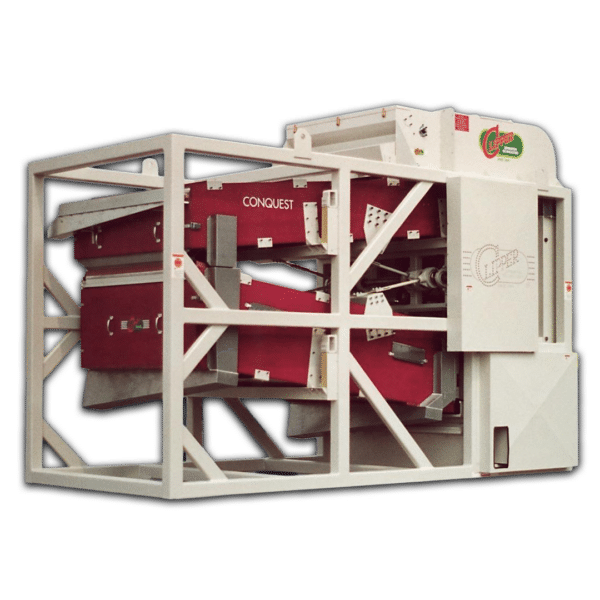
Clipper Conquest 586 commercial air screen cleaner
Clipper Conquest 586, a standard commercial model.
Supplying Clipper since 1986

Clipper Air Screen Cleaners

Clipper offers 14 standard air screen cleaner models, from a tabletop lab tester to the eight-deck Titan 44. Smaller models put one air pass through the seed after the screens, and the 54-inch machines set the air with air gate controls.

  • 14 current models, from lab tester to high capacity
  • Published ratings from about 30 to 3,500 bu/h
  • More than 150 standard screen sizes
  • One-shoe and two-shoe machines with up to nine flows
LMC Advent air screen cleaner with the aspirator on top and a long screen deck below
LMC Advent, built to order for your separation.
Proudly representing LMC in Western Canada for over 40 years.

LMC Advent Air Screen Cleaner

The LMC Advent puts the air first. Its LMC aspirator pulls light material out before the product reaches the screens, so the screens only have to size. Each machine is built to the separation: width for capacity, length for precision.

  • Deck size built to order, with decks up to 16 ft long
  • LMC aspirator ahead of the screens, with liftings collected for inspection
  • Screens in 24 in steel frames that change in under 20 minutes
  • All-metal, counterbalanced build for pre-cleaning or precision cleaning

Choose a Clipper When

  • You want a proven standard model, from a lab tester to 3,500 bu/h
  • You change crops often and want a wide choice of standard screens
  • You need a farm-size or mid-size cleaner

Choose the LMC Advent When

  • You run a commercial plant and want the deck size built to your separation
  • You want an all-metal, aspirator-first design
  • You are pairing it with LMC gravity separators, destoners or sizing shakers

Choose Your Air Screen Cleaner

Compare every current Clipper model and the LMC Advent side by side. When you know which brand fits, size your machine on that brand’s page. We confirm the size, screens and layout before you buy.

Compare Air Screen Cleaner Models

Every current Clipper model and the LMC Advent, grouped by the kind of operation they suit.

Tap a size to see its models.

ModelScreensAirPrecision cleaning (bu/h)Market or fast cleaning (bu/h)
Clipper Office Tester2 screens, 10 x 15 inOne air pass after the screensLab useLab use
Clipper AGM 2242 screens, 24.5 x 22.25 inOne air pass after the screens3050
Clipper Eclipse 3243 screens, 24.5 x 22.25 inOne air pass after the screens5580
Clipper Eclipse 3343 screens, 34 x 34 inOne air pass after the screens120250
Clipper Prelude 5263 decks, 54 in wide, one shoeBefore and after the screens200600
LMC AdventDeck size built to order, up to 16 ft longLMC aspirator before the screensSized to orderSized to order
Clipper Prelude 8263 decks, 54 in wide, two shoesBefore and after the screens3501,200
Clipper Conquest 2862 decks, 86 in longBack fan, one air gatePre-cleanerUp to 1,000
Clipper Conquest 13604 decks, one 34 in and three 60 inAir column, two calibrated air gates100 to 225600
Clipper Conquest 4864 decks, 86 in longAir column, two calibrated air gates150 to 3251,000
Clipper Conquest 5865 decks, 86 in longAir column, two calibrated air gates150 to 5001,500
Clipper Ceres 686-2-46 decks, 9 flowsAir column, two calibrated air gates600 to 9001,200 to 2,000
Clipper 768PC7 decks, 243.75 sq ftAir column, two calibrated air gates800 to 1,5002,000 to 2,500
Clipper 768MC7 decks, 243.75 sq ftAir column, two calibrated air gates1,500 to 2,0003,000
Clipper Titan 448 decks, 312 sq ftAir column, two calibrated air gates1,300 to 2,0002,500 to 3,500

Capacities are Clipper’s published ratings in bushels per hour (Nov 2026): soybeans, wheat and corn for the AGM 224 and Eclipse models (Eclipse figures are for the split-flow arrangement), and large seed and wheat for the 54-inch machines. On the Conquest 1360, 486 and 586, the low end of the precision range is Clipper’s small-seed rating. Where Clipper’s web pages and brochures list different figures, we show the lower one. The LMC Advent is built to order, so its capacity is sized for your crop and separation. Small seeds run lower. Actual capacity depends on the crop, its condition, the screens and how clean the seed must be. Specifications are subject to change. Contact Vistasort for a recommendation for your crop.

Size It on the Brand Page

Each brand page has its own sizing tool, built from that manufacturer’s own information.

Find Your Clipper Size

Pick your crop, how clean the seed must be and your volume. You get a starting Clipper model from Clipper’s published ratings.

Size a Clipper

Find Your LMC Machine

Pick the job you need done and your crop. You get the LMC machine for it, from the Advent to aspirators, gravity separators and destoners.

Find Your LMC Machine

Six Things That Decide the Size

01

Crop and Seed Size

Small seeds like canola and mustard run at a fraction of a machine’s wheat rating. Size for the smallest seed you clean.

02

How Clean It Must Be

Precision seed cleaning runs at roughly a third to two-thirds of market cleaning capacity on the same machine.

03

Incoming Condition

Heavy dockage, green material and tough lots slow a cleaner down. Plan for your worst lots, not your best.

04

Screen Area and Flows

More decks and split flows add capacity or extra size grades. Longer decks give each seed more chances at a hole.

05

Air and Dust Collection

Aspiration only works with properly sized air trunking and a dust collector or cyclone that matches the fan.

06

Power, Space and Handling

Single or three phase power, ceiling height, elevators, surge bins and room to grow all shape the right model.

Choosing Screens for Air Screen Cleaning

Screens decide what an air screen cleaner keeps. The top screen should be just large enough to pass the good seed, and the bottom screen just small enough to hold it. Sizes are usually given in 64ths of an inch.

  • Round holes separate by width. They are common on scalping screens.
  • Slotted (oblong) holes separate by thickness. They are common for sifting out thin and broken kernels.
  • Triangle and cross-slot holes handle specialty separations for certain crops.
  • Wire mesh handles fine separations in small seeds.

Start from a proven setup for your crop, then fine-tune on your own sample. Keep a spare screen one size up and one size down, and replace worn balls before the screens start to plug.

Screens Stocked in Saskatoon

Our screen guide lists starting top and bottom screens crop by crop. We stock screens in Saskatoon for Clipper, LMC and most other air screen cleaners. Send us your machine model and crops, and we will match the screens.

Where the Air Screen Cleaner Fits in Your Line

The air screen cleaner does the bulk of the cleaning, early in the line. The machines after it handle what size and air can’t separate.

1

Pre-Cleaning

Aspirators and magnets take out dust, light trash and metal ahead of the main cleaner.

2

Air Screen Cleaning You’re here

The air screen cleaner removes oversize, undersize and light material, with a sizing shaker where you need tighter grades.

3

Secondary Separation

Destoners, gravity separators, indent separators and disc machines split what is the same size.

4

Optical Color Sorting

A VistaSort optical color sorter removes discolored and diseased kernels and foreign material, depending on crop and setup.

5

Finishing

Bean polishers, impact hullers and pearlers finish specialty products.

6

Packaging

Bagging, bulk bags, palletizing and pallet wrapping at the end of the line.

“There is no single machine that cleans grain. It takes the right combination of equipment, in the right sequence, configured for the right crop.”

Steven Chivilo, President, Vistasort

Air Screen Cleaner vs Gravity Table, Indent and Color Sorter

An air screen cleaner separates by size and by how material behaves in moving air. A gravity table separates by density. Run the air screen cleaner first, so the gravity table only has to split good kernels from light or heavy ones of the same size.

MachineSeparates byRemoves
Air screen cleaner This pageWidth, thickness and how it behaves in moving airDust, chaff, straw, oversize and undersize material, light seed
Indent separatorLengthWild oats in wheat, broken kernels, short or long seeds of the same width
Gravity separatorDensity, or weight for the same sizeLight, shrivelled, immature or insect-damaged kernels the same size as good seed
DestonerDensity, for heavy materialStones, glass, metal and dirt balls the same size as the crop
Optical color sorterColor, shape and size, seen by camerasDiscolored and diseased kernels, ergot and foreign material, depending on crop and setup

Adding optical sorting after your cleaner? See the full VistaSort lineup on vistasortcolorsorter.com ↗

Air Screen Cleaner Setup and Troubleshooting

Most cleaning problems come down to feed rate, screens or air. Adjust them in that order, one change at a time, and check every discharge before you change the next.

1

Set the Feed Rate

Start lighter than you think. A thin, even layer across the full screen width separates better than a deep one.

2

Set the Screens

Check the scalpings and fines for good seed, then change one screen size at a time until both are clean.

3

Set the Air

Open the air until a few good seeds show up in the liftings, then back it off slightly. Check the air again after every screen change.

Troubleshooting Guide

What you seeLikely causeWhat to try
Good seed in the scalpingsTop screen too small, feed too heavy or plugged holesGo up one top screen size, slow the feed and check the balls
Fines or small weed seeds in clean seedBottom screen opening too small, plugged or overloadedTry a larger bottom opening, check the ball trays and reduce the feed
Good seed in the finesBottom screen opening too largeStep down one bottom screen size
Light trash left in clean seedNot enough air, air leaks or too deep a layerOpen the air gate, check seals and trunking, and slow the feed
Good seed in the liftingsToo much airClose the air gate a little at a time until it stops
Product runs to one sideMachine not level or an uneven feederLevel the cleaner and set the feeder for an even curtain
Screens keep pluggingWorn or missing balls, or damaged ball traysReplace the balls and check the trays under each screen
Dust escaping around the machineLeaky or undersized dust collection, or long, restricted trunkingShorten and straighten the trunking and match the collector to the fan

Still not cleaning the way it should? Call us with your machine model, crop and screens, and we will help you work through it.

Between Lots

  • Clean out the hopper, screens, spouts and air system to protect seed purity
  • Check the ball trays for worn or missing balls
  • Look for torn, bent or plugged screens

Each Season

  • Check belts, bearings and the eccentric drive
  • Inspect seals, screenways and air trunking for leaks
  • Sort and label your screens so the right set is ready for each crop

New or Used Air Screen Cleaner?

A reconditioned air screen cleaner can be a good fit for a farm or a second line, as long as the frame, shoe and drive are sound and you can get screens for it. Vistasort lists used and reconditioned cleaners when we have them, with the price on every listing and the machine at our Saskatoon shop.

What to Check on a Used Cleaner

  • Frame and shoe, wood or steel, for cracks and rot
  • Screens, screen rails and seals
  • Ball trays and balls
  • Eccentric, bearings and belts
  • Fan, air gates and housing
  • Screens available for your crops

What Affects the Price

Size and screen area, new or reconditioned, how many screen sets you need, aspiration and dust collection, feeding and clean-seed handling, electrical, installation and freight. We quote every machine for your crop and site.

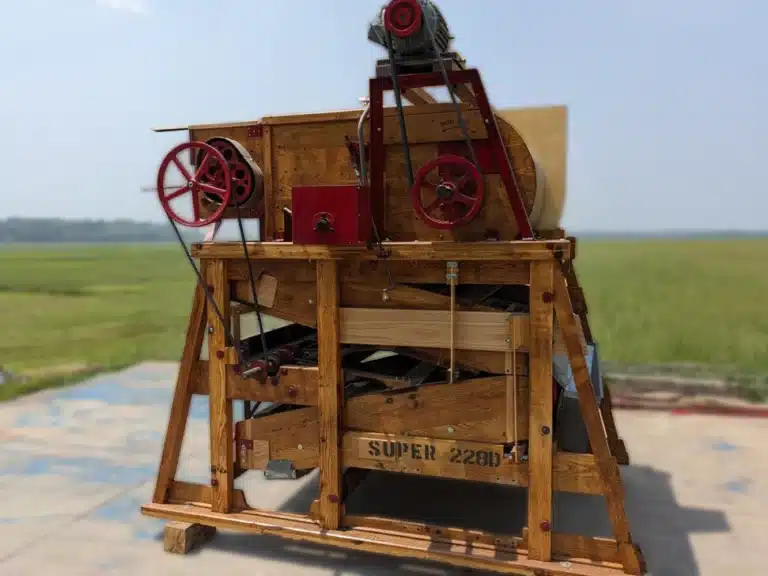
Reconditioned Clipper Super 228D used air screen cleaner in Saskatoon
Reconditioned Clipper Super 228D in Saskatoon. See the listing

Why Buy Your Air Screen Cleaner From Vistasort

Vistasort is based in Saskatoon, Saskatchewan, and has served seed and grain processors since 1986. You deal with one team from sizing through long-term support.

01

Sized for Your Crop

We match the cleaner to your crops, volume and building, and recommend one model, not a catalogue.

02

Screens in Stock

We stock screens in Saskatoon for Clipper, LMC and most other cleaners. See the screen guide.

03

Installation and Startup

Our team installs the cleaner, starts it up and sets it for your crops, then trains your operators.

04

Parts and Service

Call with your model and serial number and we will get you what you need. See our services.

05

The Whole Line

Aspirators, gravity separators, destoners, indents and VistaSort optical color sorters from one team. See our plant design.

06

Since 1986

We have supplied Clipper since we opened in 1986. Proudly representing LMC in Western Canada for over 40 years.

40+ Years With Clipper and LMC

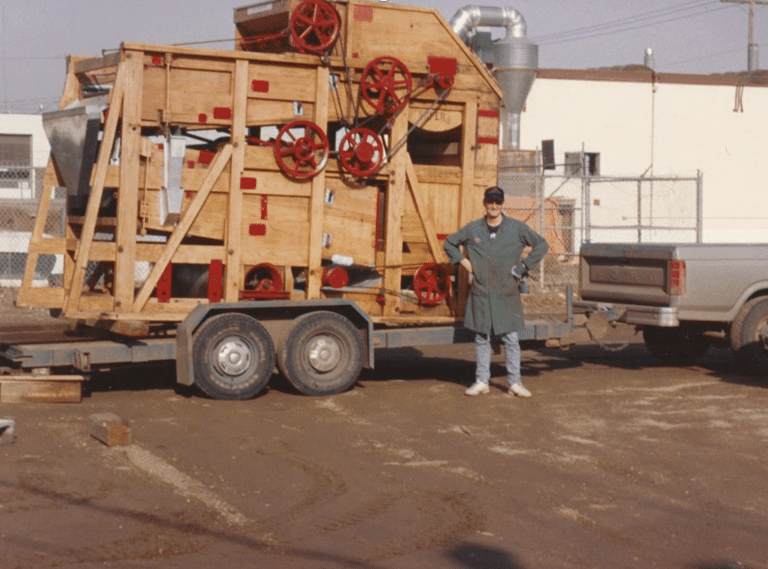
Steven Chivilo of Vistasort with a Clipper air screen cleaner in Saskatoon, Saskatchewan, 1991
Steven Chivilo with a Clipper air screen cleaner in Saskatoon, 1991.
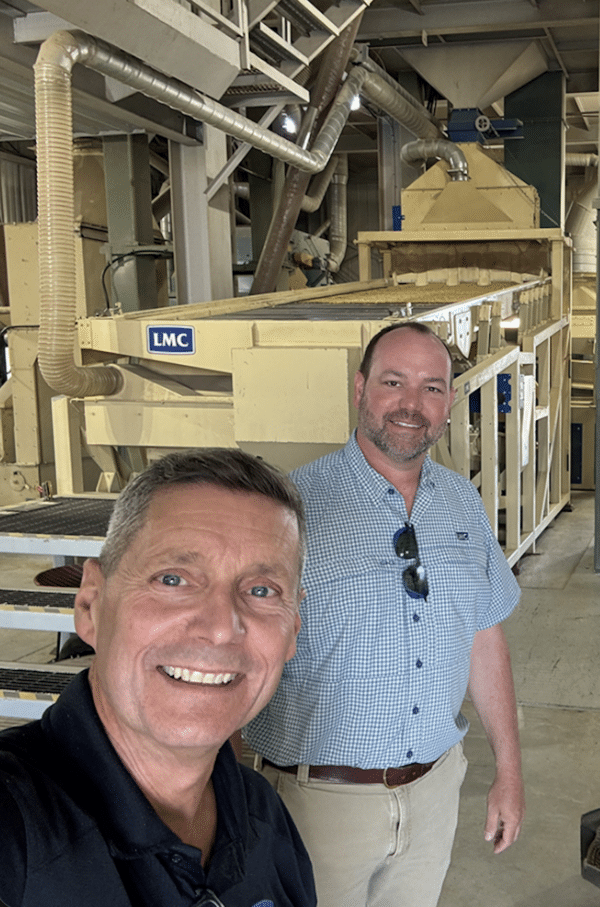
Steven Chivilo of Vistasort with Myles Mosely of LMC in front of LMC seed cleaning equipment at the Camrose County Seed Cleaning Plant, 2025
Steven Chivilo with Myles Mosely, Executive VP of LMC, at the Camrose County Seed Cleaning Plant, 2025.

Air Screen Cleaner FAQ

An air screen cleaner is a seed and grain cleaning machine that combines moving air with vibrating perforated screens. Air lifts out dust, chaff and light seed, the top screen scalps off material larger than the crop, and the bottom screen sifts out material smaller than the crop. Vistasort supplies Clipper and LMC air screen cleaners.
A feeder spreads the product evenly across the screens. Air pulls out dust and light material, the top screen scalps off oversize material and the bottom screen sifts out fines and small weed seeds. A final air pass lifts light kernels, and clean seed, scalpings, fines and liftings leave by separate spouts. Rubber balls under each screen keep the holes open.
An air screen cleaner separates by size and by how material behaves in moving air. A gravity table, or gravity separator, separates by density, splitting light, shrivelled or insect-damaged kernels from good kernels of the same size. Most lines run the air screen cleaner first, so the gravity table only has to work on product that is already sized.
The top screen scalps. Its holes are larger than the seed, so good seed drops through while straw, pods and large weed seeds ride off. The bottom screen sifts. Its holes are smaller than the seed, so fines, broken kernels and small weed seeds fall through while good seed rides over to the clean seed spout.
Round holes separate by width and slotted holes separate by thickness. Many setups scalp with round holes and sift with slots, but the right pair depends on the crop and what needs to come out. Start from a proven setup for your crop, then fine-tune on your own sample. Our screen guide lists starting screens crop by crop.
It depends on your crop, how clean the seed must be, the volume you need and the condition of the incoming product. Small seeds and precision seed cleaning both cut capacity well below a machine’s market cleaning rating. Compare the models on this page, then use the sizing tool on the Clipper page or the LMC page for a starting point. Call us and we will confirm the size, screens and layout.
Clipper’s published ratings run from about 30 bu/h of precision cleaning on the AGM 224 to 3,500 bu/h of market cleaning on the Titan 44. The Prelude 526, for example, is rated at about 200 bu/h of precision wheat cleaning and 600 bu/h of market cleaning. Actual capacity depends on the crop, its condition and the screens. The LMC Advent is built to order, so its capacity is sized for your crop and separation.
The price depends on the size and screen area, new or reconditioned, how many screen sets you need, aspiration and dust collection, feeding and handling equipment, electrical, installation and freight. Vistasort quotes every air screen cleaner for your crop and site. Call 1-800-667-6924 or email info@vistasort.com for a quote.
A fanning mill is the older farm name for a small air and screen cleaner, and it works on the same idea: a fan and screens. A modern air screen cleaner adds more screen area, controlled air before or after the screens, ball-tray screen cleaning and much higher capacity.
An air screen cleaner can’t separate material that matches the good seed in size and in how it behaves in air. Wild oats in wheat need an indent separator, stones the same size need a destoner, light kernels the air can’t lift need a gravity separator, and discolored or diseased kernels need an optical color sorter.
Clipper offers 14 standard air screen cleaner models, from a tabletop lab tester to the eight-deck Titan 44, with published ratings from about 30 to 3,500 bu/h. The LMC Advent is built to order, with customizable deck sizes, decks up to 16 ft long and an LMC aspirator ahead of the screens. Vistasort supplies and supports both, and we will recommend the one that fits your crop, volume and plant.
Vistasort, based in Saskatoon, Saskatchewan, has supplied Clipper air screen cleaners since 1986 and has represented LMC in Western Canada for over 40 years. We size the machine, supply the screens, install it and support it with parts and service. Call 1-800-667-6924 or email info@vistasort.com.
Yes. We stock screens in Saskatoon for Clipper, LMC and most other air screen cleaners. Call or email with your machine model, serial number and crops, and we will match the screens and parts you need.

Get Your Air Screen Cleaner Quote

Tell us your crops, your volume and how clean the seed needs to be. We will recommend one Clipper or LMC model and send you a quote.

info@vistasort.com · 306-242-9292 · 835 58th Street East, Saskatoon, SK S7K 6X5